

Curious ads claim a cheek swab can reveal whether you’ll struggle with alcohol or opioids. The idea is tempting, but addiction is woven from genes and life experience. Here’s what today’s DNA tests can—and cannot—tell you, along with practical ways to stay ahead of risk.
Key Takeaways
No single gene decides your fate: Addiction involves hundreds of tiny genetic nudges working together.
Life experience often tips the scales: Trauma, stress, and age at first use can matter more than DNA.
Most kits focus on metabolism, not compulsion: Results may flag how you break down alcohol or opioids rather than predict misuse.
Current tests have weak predictive power: Even an FDA-cleared opioid test performs only slightly better than chance.
Family history still beats fancy tech: Talking with relatives about substance issues offers clearer insight than today’s consumer genetics.
Professional guidance adds crucial context: A doctor or genetic counselor can weave results into your full health picture.
The Complex Reality of Addiction
What Addiction Really Means
Addiction is a long-lasting brain disorder where cravings overrule consequences. Drugs or alcohol flood reward circuits, then dull them, driving people to chase the same high despite harm.
How Your Genes Play a Part
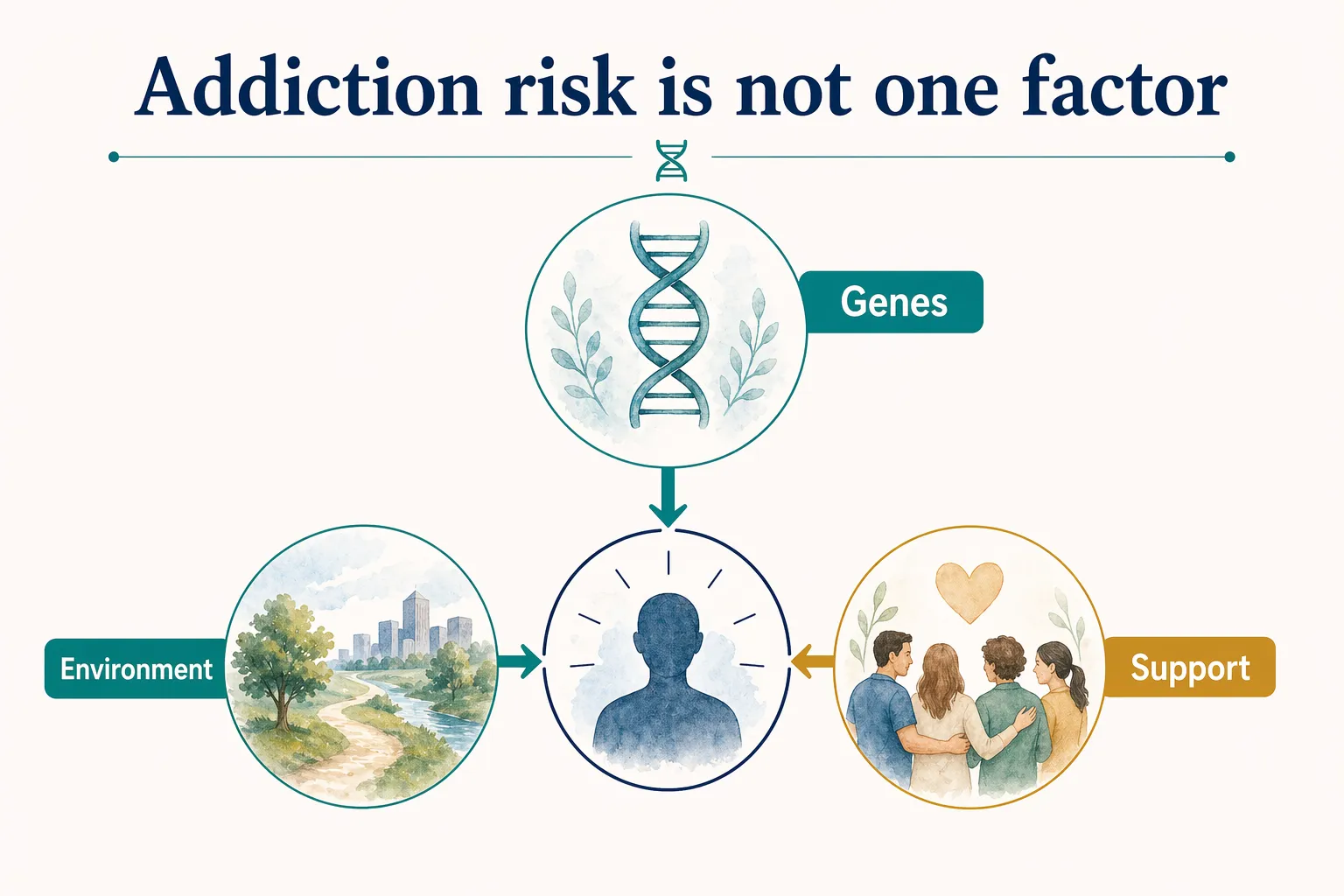
Imagine your DNA as a pressure gauge for vulnerability. Many genes tweak how intensely your brain responds to substances, but none pull the trigger alone. Polygenic risk scores add thousands of variants together, yet they explain only a small slice of who actually develops a substance use disorder.
Why Life Experience Matters
Early trauma, stressful jobs, peer influence, and mental-health struggles can “turn up” or “turn down” those genetic pressures. Identical twins raised in different settings often diverge in substance use because environment edits the way genes work.
What Today’s DNA Tests Can — and Can’t — Tell You
How Home Kits Scan Your DNA
Think of a DNA chip like a grocery barcode scanner: it sweeps across hundreds of thousands of genetic “codes” and flags small differences in seconds. Kits look for single-letter changes (SNPs). A well-known SNP in ALDH2 can cause alcohol flush, while one in OPRM1 tweaks opioid response.
Big Gaps in Current Testing
Most kits read only a fraction of the variants linked to addiction, and they ignore environment entirely. The first FDA-authorized opioid-risk test checks 15 variants and still predicts misuse only slightly better than flipping a coin. A “low-risk” result may lull users into false confidence, while a “high-risk” flag can spark needless fear.
If you’d like a fuller picture of what consumer genetics can (and can’t) do, explore our step-by-step guide to genetic testing.
Making Sense of Your Results
When a Report Says “Higher Genetic Likelihood”
You may process certain drugs differently, so exposure under stress could raise risk. Use that heads-up to plan safeguards, such as choosing non-opioid pain relief or delaying alcohol use.
When a Report Says “Typical Genetic Likelihood”
Average DNA isn’t armor. Social circles, coping skills, and mental health still steer outcomes, so stay alert to early warning signs of problematic use.
Why Professional Guidance Matters
Share any addiction-related result with a physician or genetic counselor. They can fold in family history, medications, and mental health. For tips on turning raw reports into action, see our article on making sense of 23andMe health results.
Staying Ahead of Addiction Risk
Treat Family History as Data
A frank chat with relatives often reveals patterns that a lab report misses. If close kin have struggled with alcohol or drugs, you know extra vigilance is wise.
Build Protective Habits
Manage stress: Exercise, meditation, or therapy can quell cravings before they start.
Choose supportive friends: Peers who respect substance limits lower temptation.
Act early: Counseling at the first sign of escalating use is far easier than late-stage treatment.
For broad tips on using DNA knowledge to guide lifestyle choices, browse our primer on understanding genetic risk.
Guard Your Genetic Privacy
DNA files can reveal sensitive health clues. Learn how to safeguard raw data in our overview of privacy in ancestry DNA testing.
Putting It All Together for Your Future
Genes nudge, but environment decides. Even with risk variants, healthy coping skills and early support can keep addiction at bay. Use DNA results as one compass point—then steer with informed choices and professional advice.